

Cut Trenches and Install Pipe for Drainage and Access
Trenches and Culvert Pipe Installation in Hendersonville for properties with standing water, blocked driveways, or utility lines requiring underground routing
Steverson's Hauling & Excavation, Inc. provides trenching and culvert pipe installation for homeowners and rural property owners in Hendersonville who need to move water away from structures, restore access across drainage channels, or run utilities underground. You might have a driveway that floods every time it rains because there's no culvert to let water pass beneath it, or you might need a trench dug for electrical service, septic lines, or irrigation. The work involves cutting a narrow channel to the required depth, setting pipe or conduit if needed, and backfilling in a way that prevents settling or erosion.
Trenching depth and width depend on what's being installed and what codes or specifications apply. Culvert pipes are typically corrugated metal or plastic, sized to handle the volume of water flowing through a ditch or across a low spot. Installation includes bedding the pipe on compacted stone, setting it at the correct slope, and covering it with fill that's tamped down to support vehicle weight or foot traffic. In areas with heavy seasonal rainfall, proper culvert sizing and placement prevent washouts and keep access roads functional year-round.
If water is pooling on your property or you need a trench dug for infrastructure, reach out to schedule the work and go over site conditions and project requirements.
Our Services
How Trenching and Pipe Installation Proceed and What You'll See After
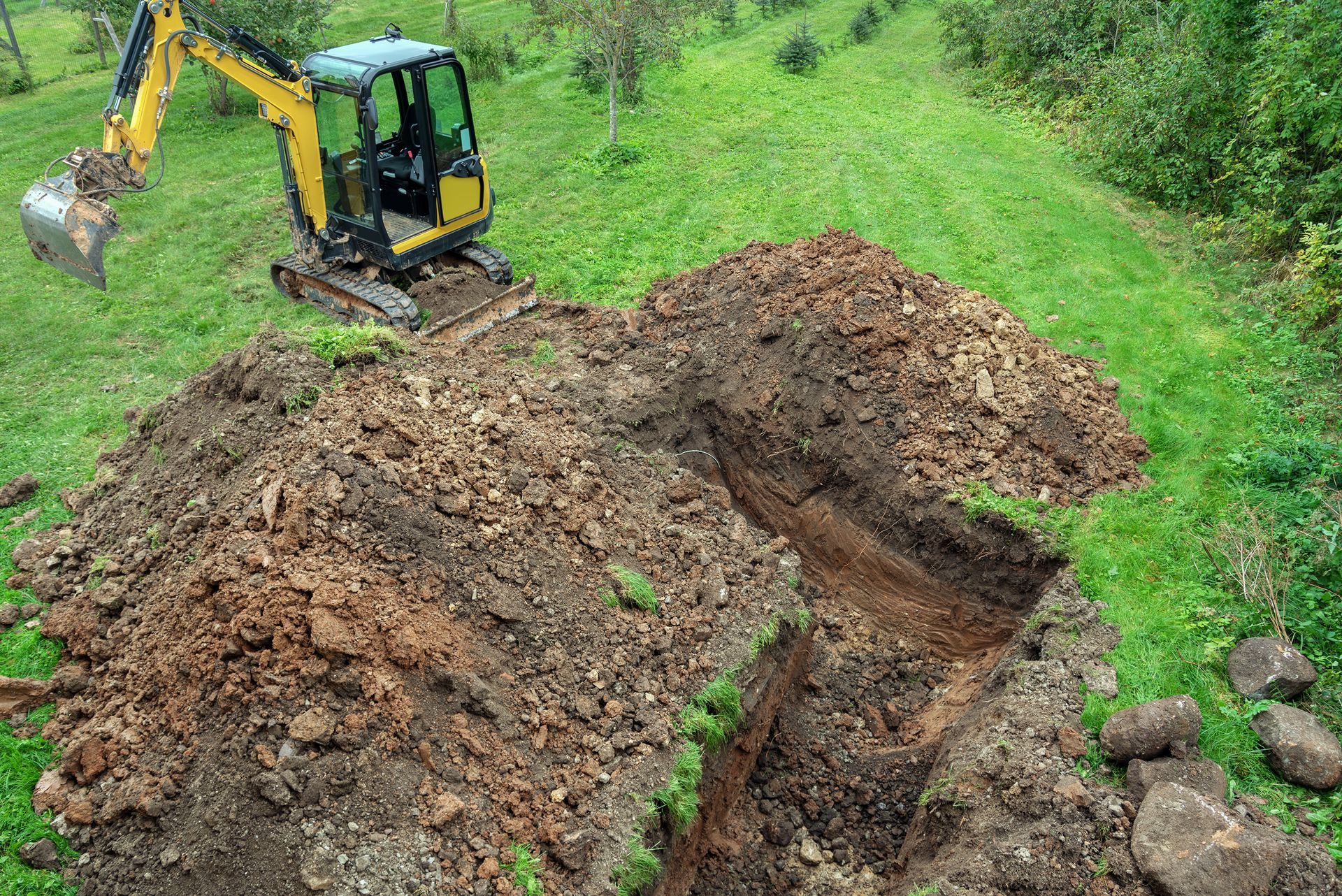
You'll see a trackhoe or trencher cut a clean channel along the route, with spoil piles set to the side for backfill once pipe or conduit is placed. Culvert pipes are laid in the trench, checked for grade and alignment, then surrounded with gravel to support the pipe and allow water to flow freely. Utility trenches are dug to depth based on frost line or code requirements, with bedding material placed under cables or pipes to prevent damage during backfilling.
Once the trench is filled and compacted, you'll see a driveway that no longer floods, a drainage ditch that carries water away from buildings, or underground lines in place and ready for connection. Steverson's Hauling & Excavation, Inc. restores the surface as close to original grade as possible, though final seeding or paving is handled separately depending on what's on top of the trench.
The work does not include connecting utilities, pouring concrete over culverts, or installing catch basins, but it does provide the trench and pipe placement needed for those systems to function. If the ground is rocky or crosses other buried lines, the approach adjusts to avoid conflicts and keep the project moving. The goal is to route water or infrastructure where it needs to go without causing future problems.
What Property Owners Ask About Trenching and Culverts
Before trenching begins, people in Hendersonville usually want to know about depth, timing, and how the installation will hold up under load and weather.
How deep does a trench need to be for a water line or electrical conduit?
Water lines are typically buried below the frost line, around eighteen inches in this region, while electrical conduit depth depends on voltage and whether it's direct burial or in conduit.
What size culvert pipe is needed for a driveway?
Pipe diameter depends on the width of the drainage area and how much water flows through during heavy rain, with twelve to eighteen inch pipe being common for residential driveways.
Will the trench settle after it's backfilled?
Proper compaction during backfilling minimizes settling, but some minor sinking is normal and can be topped off with additional soil or gravel after a few weeks.
Can trenching be done without tearing up the entire yard?
Trenches are cut as narrow as possible to minimize surface disturbance, and equipment is routed to avoid landscaping and structures wherever feasible.
How long does it take to dig a trench and install a culvert?
A typical driveway culvert installation takes one day, while longer utility trenches may take several days depending on distance, depth, and ground conditions.
If your property needs drainage work or underground routing for utilities, contact Steverson's Hauling & Excavation, Inc. to walk the site and plan the trench layout and pipe installation that solves the problem for the long term.